
Teach Kids Color Mixing: 6 Easy Activities and a Free Printable
"Why did it turn green?" Few questions make a child's eyes light up like the moment two colors blend into a new one. Color mixing is easy to try, needs almost no equipment, and turns coloring time into a small science experiment.
This guide gives you a simple mixing chart, six activities you can do with crayons, pencils or washable paint, and a free three-page printable to get started. Everything is aimed at ages 3 to 9, and you can adjust each activity to suit your child.
01The short answer: how colors mix
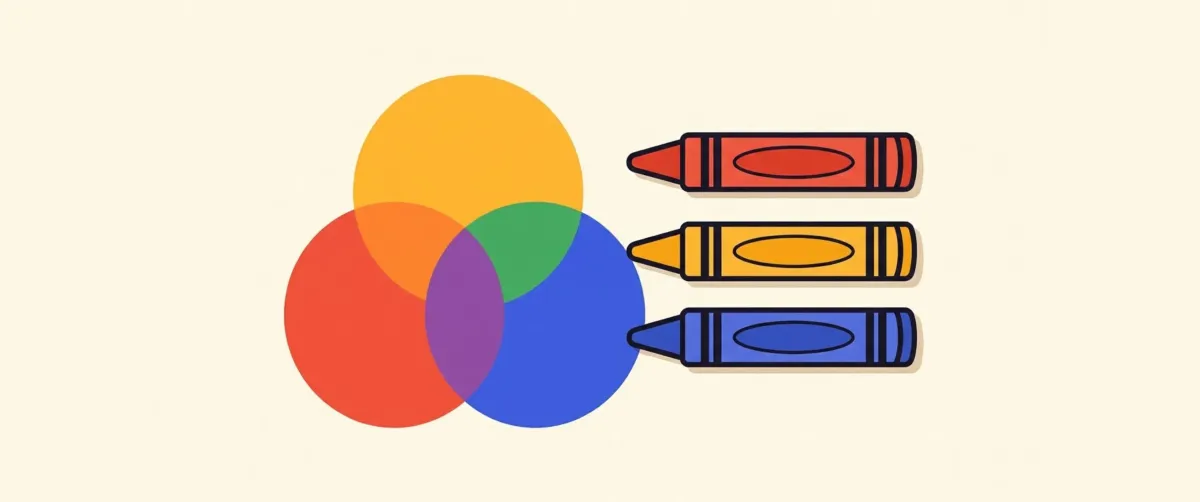
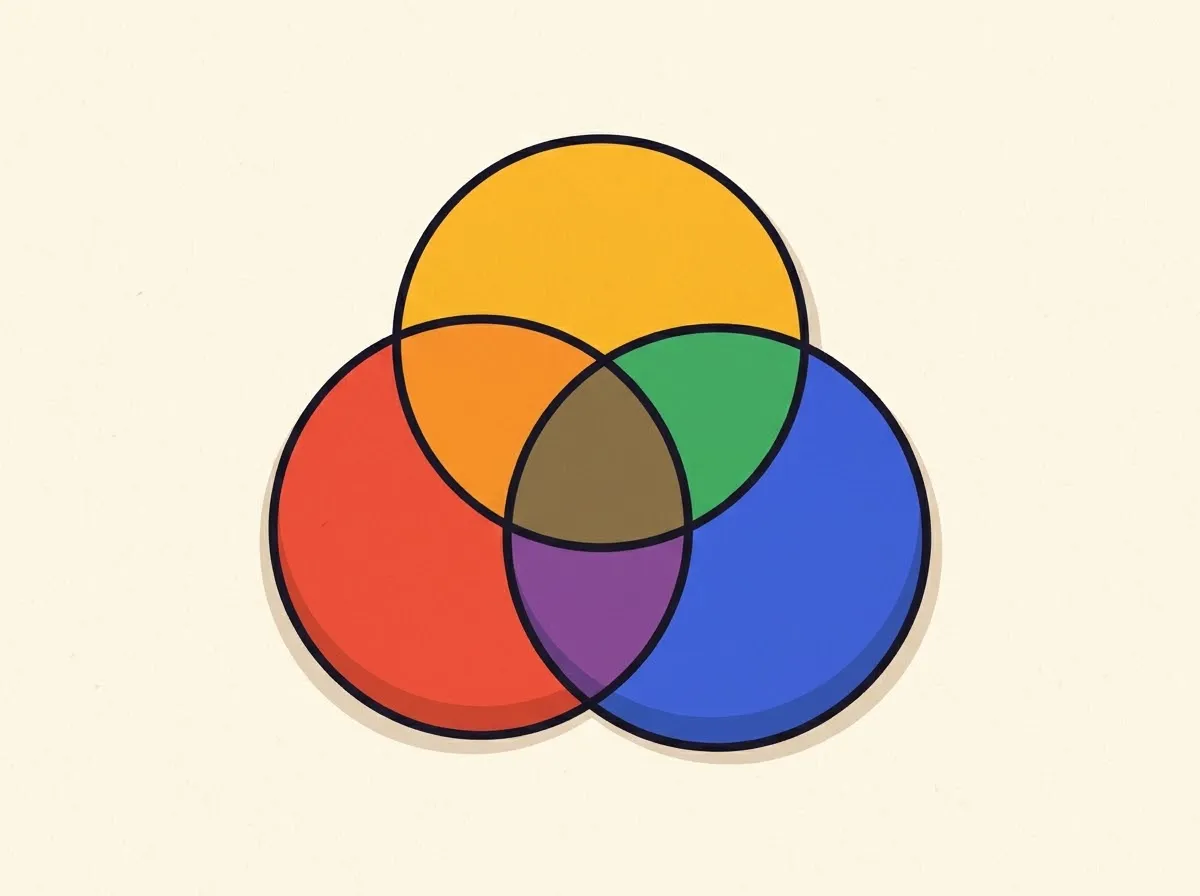
With paints, crayons and colored pencils, most children start with three primary colors: red, yellow and blue. Mixing two of them makes the secondary colors.
| Mix this | To get | Notes |
|---|---|---|
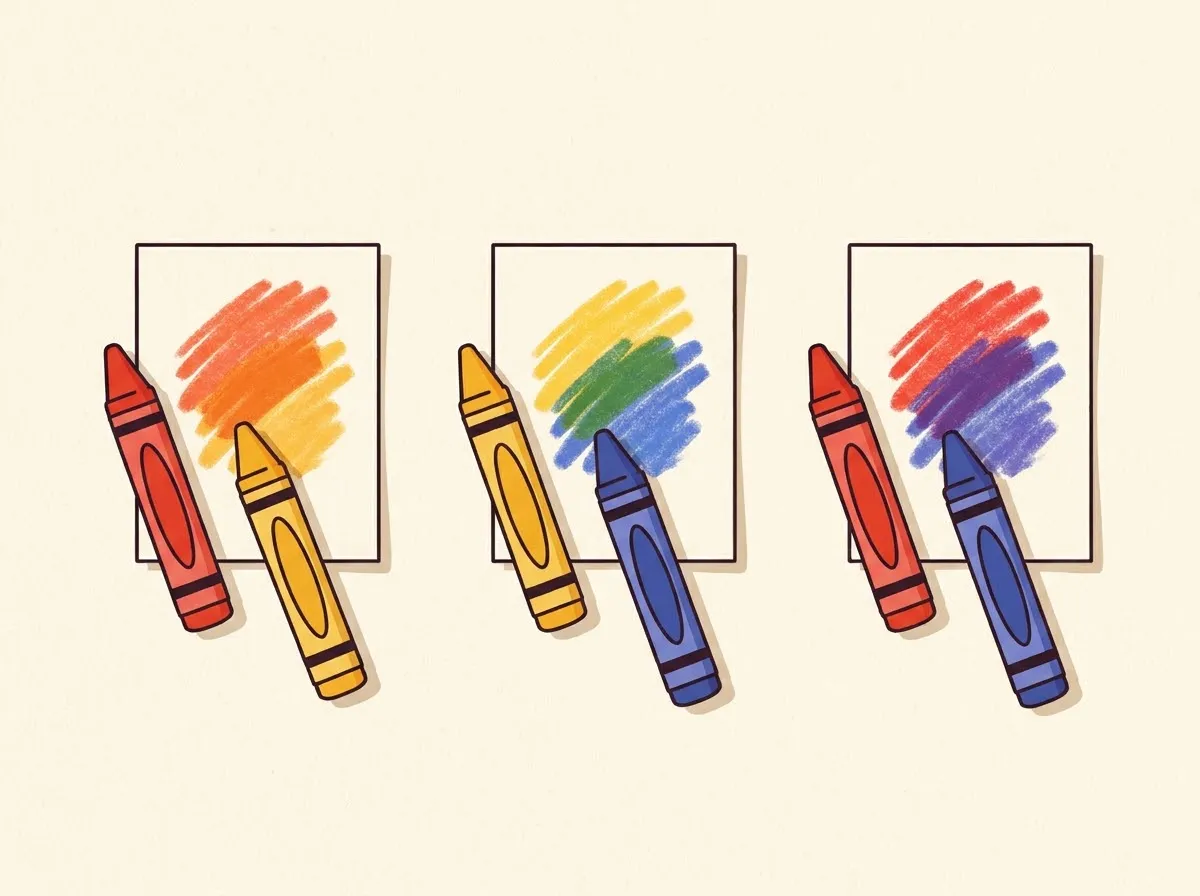
| Red + yellow | Orange | More yellow gives a lighter, sunnier orange |
| Yellow + blue | Green | More blue gives a deeper green |
| Red + blue | Purple | Results vary a lot by brand and shade |
| Red + yellow + blue | Brown or muddy gray | Mixing all three tends to dull the color |
| Any color + white | A lighter tint | Add white gradually, since a little goes a long way |
| Any color + a touch of black | A darker shade | Add black very slowly |
These are guides, not exact recipes. Different brands use different pigments, so a blue-and-red mix can look more purple in one set and more brown in another. That's part of the fun, because children can compare what their own set does.
02Free printable: Color Mixing Magic
We made a three-page printable to go with these activities. It's designed with bold outlines, large shapes and plenty of space, so younger children can color it comfortably.
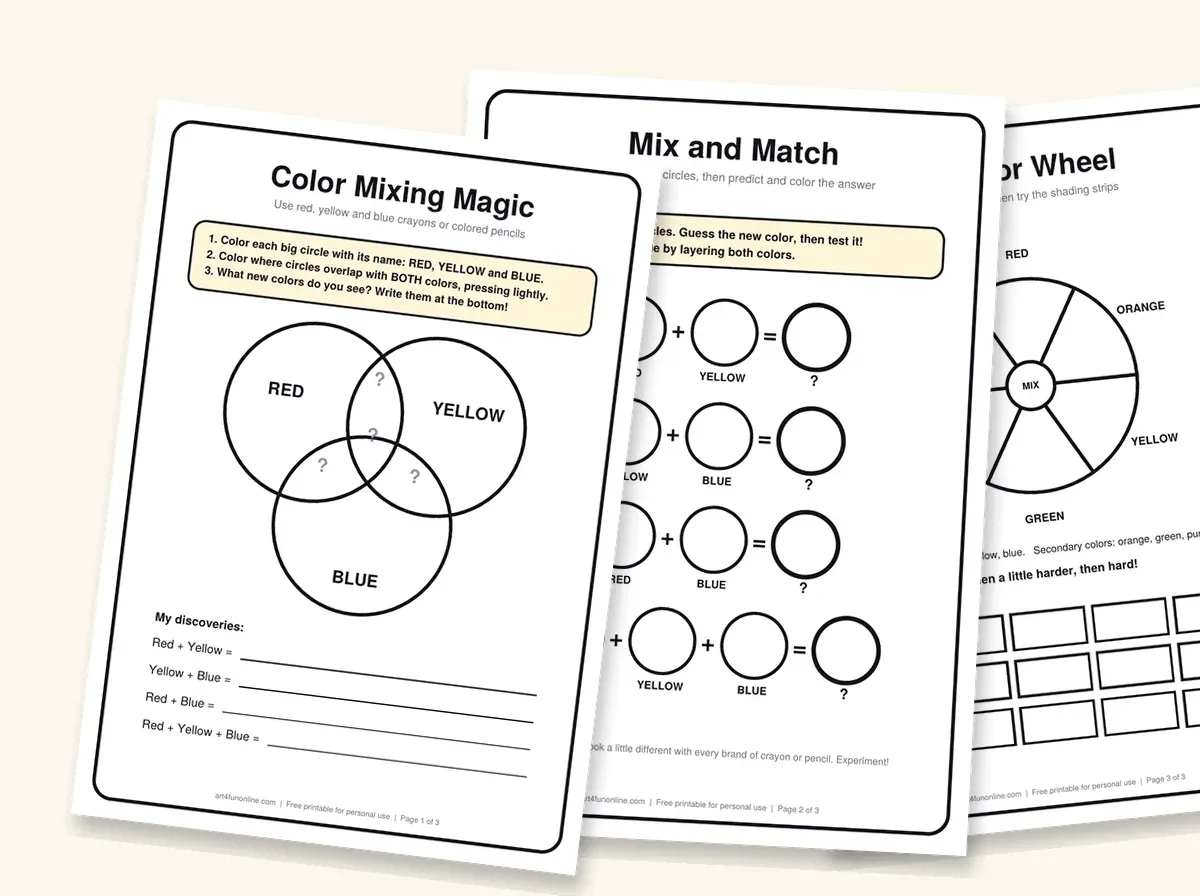
- Page 1, Color Mixing Magic: three overlapping circles to color and a space to write down discoveries.
- Page 2, Mix and Match: predict the result of each mix, then test it.
- Page 3, My Color Wheel: color a six-piece wheel and practice light-to-dark pressure.
Download the free Color Mixing Magic printable (PDF)
The pages are A4. If you use US Letter paper, choose "Fit to page" in your print settings. For crisp, dark lines and no bleed-through, see our guide to printing coloring pages at home. You're welcome to print as many copies as you like for your own family or classroom.
03What you'll need
- Red, yellow and blue crayons or colored pencils (a basic set is fine)
- Optional: washable paints in red, yellow, blue and white, plus a paper plate
- Plain paper or the free printable
- A scrap sheet to test colors on
04Six activities to try
| Activity | Best ages | Time | Supplies |
|---|---|---|---|
| 1. Overlapping circles | 3-6 | 15 min | Printable, crayons |
| 2. Predict, then test | 4-9 | 15-20 min | Printable, pencils |
| 3. Paper plate paint mixing | 4-9 | 20-30 min | Washable paint, plate |
| 4. Color wheel | 5-9 | 20 min | Printable, pencils |
| 5. Light-to-dark strips | 5-9 | 10-15 min | Printable, one color |
| 6. Mixed-color coloring page | 5-9 | 30-45 min | Any coloring page |
1. Overlapping circles
Use page 1 of the printable. Color each circle with its name, pressing lightly. Then color the overlaps with both colors layered together. Ask your child what they see, and let them write the answers in the "My discoveries" box.
Tip: Press lightly with crayons. Heavy pressure builds a waxy layer that hides the color underneath.
2. Predict, then test
Use page 2. Before coloring, ask your child to guess what each mix will make. Say it out loud, then test it. Being right is fun, and being surprised is even better. The guessing is where the learning happens, because children practice making a prediction and checking it.
Tip: For the last row, ask what they think happens when all three mix, and then compare it with the pairs.
3. Paper plate paint mixing
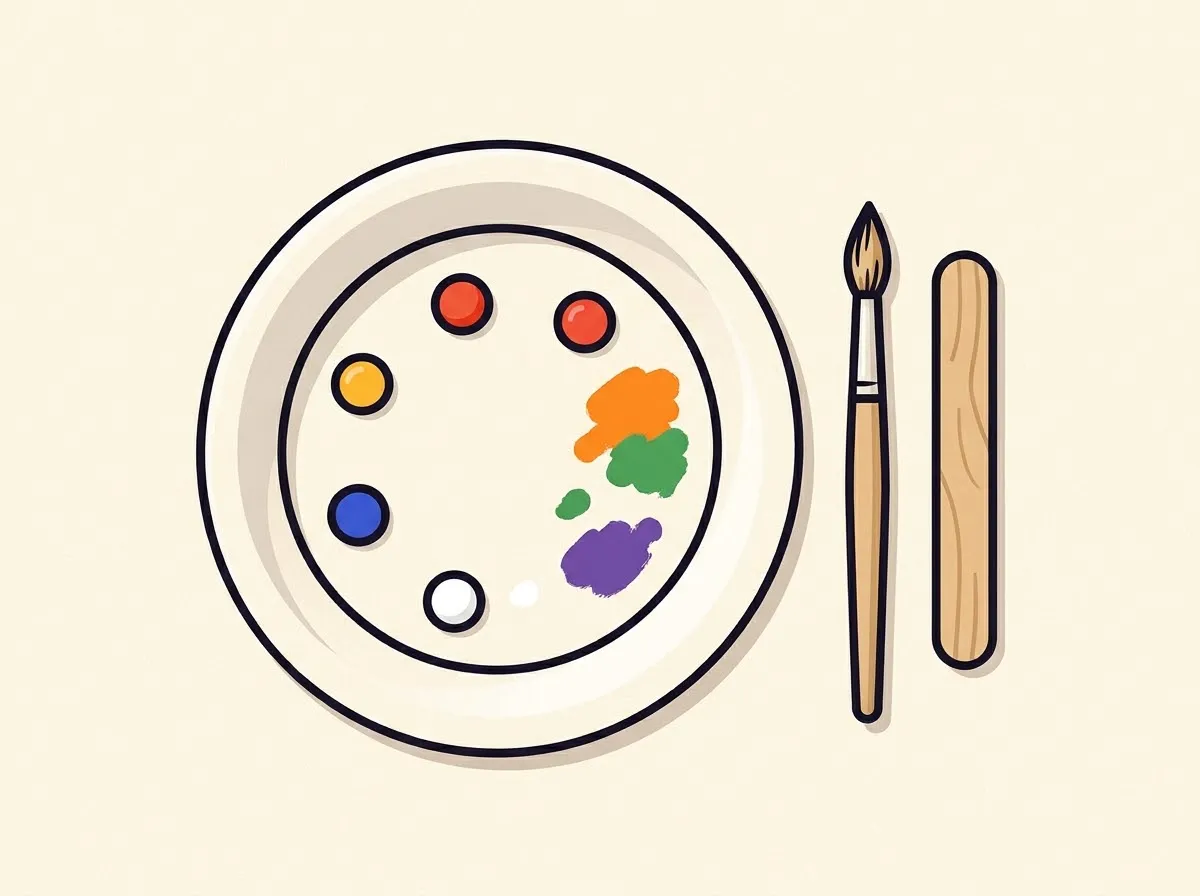
Squeeze small dots of washable red, yellow and blue paint onto a paper plate, with a dot of white on the side. Let your child mix with a brush or a craft stick and paint swatches on scrap paper. Try mixing different amounts, such as more yellow than red, and compare the oranges.
Tip: Use heavier paper if you can, since wet paint can wrinkle thin sheets. Cover the table first and supervise young children.
4. Color wheel
Page 3 has a six-piece wheel. Color red, yellow and blue first, then fill in the orange, green and purple pieces between them using layers. When the wheel is done, point out which colors sit next to each other and which are across from each other.
Tip: Hang the finished wheel somewhere visible and use it as a reference during future coloring.
5. Light-to-dark strips
At the bottom of page 3, children color each row with one color and gradually increase the pressure, from lightest to darkest. It shows that color isn't only about mixing. Pressure and layers change how a color looks too, and it's also gentle practice in controlling a crayon. Our guide to coloring and fine motor skills explains how this kind of pressure control develops.
Tip: For paint, add a little white to make lighter tints and a tiny touch of black for darker shades.
6. Mixed-color coloring page
Choose any bold coloring page and set a rule: only use colors you mixed yourself, apart from the three primaries. A fish might have an orange body and green fins, and a bear might have a brown coat made by layering. It's a creative challenge and uses everything they've learned.
Pages with large, open shapes work best. Colorful animals are a good match, such as the Cozy Fish Coloring Book or the Cozy Macaw Coloring Book. Our guide to choosing a coloring book by age can help you pick the right level.
05Tips for success
- Start with two colors. Don't introduce all the mixes at once. Master red, yellow and orange before moving on.
- Use light layers. With crayons and pencils, color lightly and add the second color on top.
- Test on scrap paper first. It takes the pressure off the finished page.
- Let them explore. If your child wants to mix everything into brown, let them. It's still a discovery.
- Name the colors. Words like "tangerine," "lime" and "violet" build vocabulary and make mixing more memorable.
- Use the right tools. Our comparison of colored pencils, markers, crayons and gel pens explains how each one behaves when layered.
- Try seasonal pages. Winter scenes are great for mixing icy blues and purples. See our 15 Christmas and winter coloring activities for families for more ideas.
06Common problems and quick fixes
| Problem | Likely cause | Fix |
|---|---|---|
| Colors look muddy | Too many colors mixed together | Stick to two colors at a time |
| Crayon layer won't blend | Heavy first layer | Press lightly on the first color |
| Purple looks brown | The red or blue has a different shade | Try a different red or blue from the set |
| Paper wrinkles with paint | Thin paper and too much water | Use heavier paper and less water |
| Child loses interest | Activity too long or too hard | Do one activity at a time |
07For curious kids: why do screens mix differently?
If your child plays with a tablet, they may notice that screens mix colors differently. Paint and crayons mix by absorbing light, while screens mix by adding light. On a screen, red and green light together make yellow. That's why the mixing chart in this article is only for paint, crayons and pencils. It can be a nice conversation starter for older children.
08Safety notes
- Choose art supplies labeled non-toxic and check the age range on the packaging.
- Use washable paints and cover the table and clothes.
- Supervise young children, and keep paint, caps and small pieces away from mouths.
- Wash hands after painting.
09Frequently asked questions
At what age can children learn color mixing?
Many children enjoy simple mixing from about age 3, with help. Older children can predict results, compare shades and make their own color wheels.
Do I need paint to teach color mixing?
No. Crayons and colored pencils work well when layered lightly. Paint just makes the mixing more visible.
Why doesn't my mix match the chart?
Different brands use different pigments, so results vary. Treat the chart as a guide and let children discover what their own supplies do.
Why is red, yellow and blue used instead of other primaries?
Red, yellow and blue are the classic set taught to children because they're easy to find and give clear results. Printers and professional artists often use slightly different primaries, but this set is a good starting point.
Can I use the printable more than once?
Yes. Reprint it whenever you like for personal or classroom use.
010Keep reading
- Coloring and Fine Motor Skills: What Parents Can Realistically Expect
- Colored Pencils vs Markers vs Crayons vs Gel Pens
- 15 Christmas and Winter Coloring Activities for Families
011Ready to color?
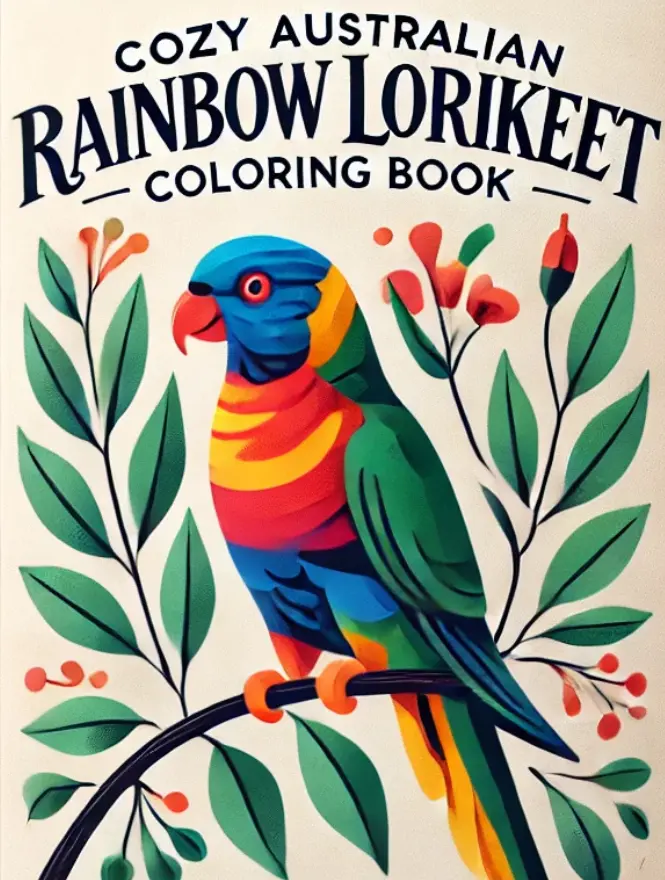
Start with the free Color Mixing Magic printable, and get 4 more preview pages from our free pages. When you want a whole book to experiment with, the Cozy Australian Rainbow Lorikeet Coloring Book has 39 bold, easy pages of bright birds, with large open spaces that suit mixing and layering. You can also browse the full shelf.